

Reviewed by Dr. Brent Côté, Orthodontist | Updated September 2026
Key Takeaways
Crooked milk teeth are often part of normal early development, but certain signs deserve a professional opinion. Watching changes over time, keeping regular dental visits, and asking questions early can give you useful reassurance.
• Slightly angled or overlapping baby teeth are often normal.
• Jaw growth, genetics, and oral habits can influence alignment.
• Crooked milk teeth do not automatically mean permanent teeth will be crooked.
• Pain, chewing trouble, severe crowding, or unusual eruption should be assessed.
• Early monitoring helps your dentist or orthodontist guide you at the right time.
Why Baby Milk Teeth Crooked Growth Worries So Many Parents
When your child’s first teeth appear at an angle, overlap, or seem crowded, it is natural to wonder whether something has gone wrong. You may compare their smile with another child’s or worry that a small irregularity will become a much larger problem. The phrase crooked milk teeth can sound more serious than the situation actually is.
Baby teeth erupt while the jaw and mouth are still developing. They do not always arrive in a neat row, and the position of one tooth can change as neighbouring teeth appear. A young child may have a temporary gap, mild overlap, or a tooth that looks slightly rotated without having a lasting orthodontic problem.
That said, not every concern should be dismissed. Your child’s dentist can look at eruption, tooth health, the bite, and overall development. If something appears unusual, an orthodontic assessment for young children can add another perspective without meaning that treatment must begin immediately.
Is It Normal for Milk Teeth to Come In Crooked?
Slightly uneven baby teeth are common, especially while only a few teeth have erupted. Your child’s jaw is growing, and the available space changes as more teeth emerge. In many cases, a tooth that looks crooked at first settles into a more balanced position as the surrounding teeth come in.

The Difference Between Spacing Issues and True Misalignment
Spacing and alignment are related, but they are not the same thing. A small gap may simply reflect the normal shape of a developing dental arch, while mild overlap may improve as the jaw grows. A true bite concern is more about how the upper and lower teeth meet, whether the jaws fit together comfortably, and whether a tooth is blocked or erupting in an unusual direction.
You can take a simple photo every few months if your child is comfortable, but avoid judging progress from week to week. Teeth often seem different depending on the angle, lighting, and which teeth have recently appeared. General information about crooked baby teeth can help you frame your questions, but your child’s own examination is more useful than comparison with online images.
If the teeth are clean, comfortable, and functioning normally, observation may be all that is needed. Your dentist can tell you whether the appearance fits ordinary development or whether the position deserves closer follow-up.
Common Causes of Crooked Milk Teeth in Young Children
There is rarely one single explanation for baby milk teeth crooked in appearance. Tooth position reflects the size and shape of the developing jaw, the timing of eruption, family traits, and the forces placed on the teeth. Some influences are temporary, while others may continue to affect the bite as your child grows.
Genetics and Jaw Size: Why Some Children Are More Prone
According to the Canadian Association of Orthodontists, family patterns can affect jaw proportions, tooth size, and the way teeth erupt. If close relatives had crowding, unusual spacing, or a pronounced bite relationship, your child may have some of the same tendencies. This does not predict the final result with certainty, because growth and eruption continue to change the picture.
A smaller developing arch can leave less room for teeth to arrive in a straight line. Conversely, spaces between baby teeth can be quite normal and may provide room for larger permanent teeth later. The useful question is not whether your child’s smile looks perfectly even today, but whether growth and eruption are progressing in a healthy direction.
Habits That Can Shift Baby Teeth Out of Position
Thumb-sucking, prolonged pacifier use, tongue-forward swallowing patterns, and frequent mouth breathing can place repeated pressure around the front teeth. The effect depends on the habit’s duration, frequency, and intensity. A habit that has stopped may have less influence than one that continues for many hours each day.
Rather than scolding your child, discuss the habit calmly with your dentist. You can also notice when it happens and offer gentle alternatives for comfort. If you are concerned about tooth position, a professional can consider the habit alongside the bite instead of treating one visible tooth in isolation.
How Milk Teeth Development Compares to Permanent Teeth
Milk teeth are smaller and lighter in colour than permanent teeth, and they occupy a mouth that is still growing. Their job includes helping your child chew, speak, and maintain space while the permanent teeth develop beneath or behind them. Their appearance can therefore change considerably during the early years.
Permanent teeth are generally larger and may erupt with different spacing and angulation. A child’s permanent front teeth can look prominent or uneven at first, particularly during a transition stage when some baby teeth have fallen out, and others remain. This does not automatically indicate that the final adult alignment has been established.
Regular dental care matters for both sets of teeth. Decay, early loss, infection, or a tooth that remains in place too long can affect the developing bite. If you want broader background on alignment and bite relationships, common orthodontic problems explained shows why appearance and function are considered together.
If Milk Teeth Are Crooked, Will Permanent Teeth Be Too?
If milk teeth are crooked, it is understandable to wonder whether the permanent teeth will follow the same path. The honest answer is that baby tooth alignment offers clues, not a guaranteed forecast. Jaw growth, inherited traits, eruption timing, oral habits, and the available space all continue to influence the developing smile.
Some children with mildly crowded baby teeth later develop a more comfortable arrangement as the jaw grows and permanent teeth emerge. Other children have early signs of a space or bite issue that becomes clearer over time. This is why monitoring is often more useful than making a firm prediction from a toddler’s smile.
Your dentist or orthodontist may recommend observation rather than immediate treatment – age for braces varies by child, which is part of why timing decisions are individual. That does not mean the concern has been ignored; it means the timing of growth and eruption is being respected. An assessment can also identify situations where earlier guidance may be helpful.
Ages and Stages: What to Expect as Teeth Come In
Every child follows an individual timetable, so there is a wide range of normal eruption. The first teeth often appear in the front, followed by additional teeth that gradually fill the dental arch. Temporary unevenness is common when only part of the set has arrived.
As your child grows, the jaws change, and the spaces between teeth may change with them. Later, baby teeth loosen, and permanent teeth begin to erupt, creating another period when the smile may look irregular. It can be helpful to think in stages rather than expecting a finished alignment at every age.
For a practical reference, parents often benefit from knowing what to watch during each stage:
• Early eruption: note whether teeth appear comfortable and can be cleaned.
• Growing dentition: watch for persistent crowding, unusual bite closure, or delayed eruption.
• Tooth transition: notice whether baby teeth loosen and permanent teeth have a clear path.
• Mixed dentition: bring concerns about spacing, crossbites, or protruding teeth to a dental visit.
These observations are not a diagnosis. They simply give you useful details to share during an appointment and help you recognize changes that may otherwise be easy to miss.
Signs That Go Beyond Normal Crookedness
A little overlap or angling is usually less concerning than a pattern that affects comfort, function, or eruption. You know your child’s usual eating and speaking habits, so changes in those areas are worth mentioning. A child may not describe a bite problem clearly, especially if it has developed gradually.
Persistent pain, swelling, bleeding unrelated to brushing, or a damaged tooth should be assessed by a dentist. You should also ask about a tooth that has not appeared when expected, a tooth erupting far out of position, or severe crowding that seems to block another tooth. These signs do not prove a serious problem, but they deserve more than casual observation.
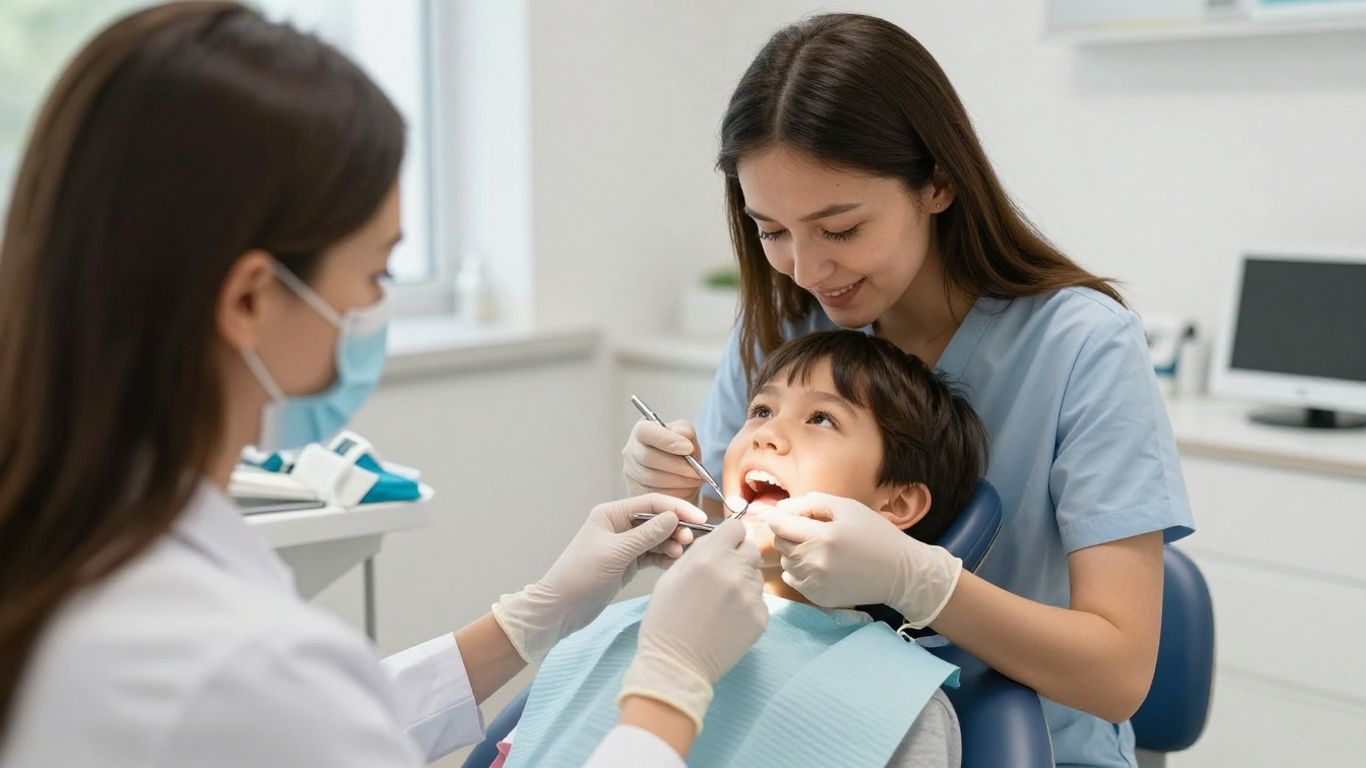
Pay attention to function as well as appearance. Difficulty chewing, repeated cheek biting, speech concerns, jaw discomfort, or teeth that show unusual wear may point to a bite relationship that needs review. A timely appointment can clarify whether the issue is temporary, dental, or orthodontic.
A Real Case From Our Practice: A Parent’s First Orthodontic Visit
At a first orthodontic visit, parents often arrive with one very specific worry: a front tooth that looks tilted or crowded. The child may be cheerful and have no pain, while the parent has spent weeks studying photographs and wondering whether treatment is already necessary. That reaction is common and understandable.
A useful consultation begins with listening. The orthodontist leading each consultation asks what you have noticed, reviews dental and medical history, and looks at the teeth, bite, facial balance, and stage of development. Depending on the child’s age and the concern, the recommendation may be to monitor growth rather than start active treatment.
The most reassuring outcome is not always a procedure. Sometimes it is a clear explanation, a suggested review interval, and a list of changes that should prompt an earlier call. If you are looking for general context before an appointment, professional guidance on crooked baby teeth can help you prepare questions without replacing an examination.
Common Mistakes Parents Make When Watching Their Child’s Teeth
It is easy to focus on the most visible tooth and miss the larger picture. Parents may also assume that perfectly straight baby teeth guarantee a straight adult smile, or that crooked milk teeth always require braces. Both conclusions can create unnecessary anxiety.
Another common mistake is waiting for pain before asking about an alignment concern. Many bite and eruption issues are painless, particularly in the early stages. You do not need to diagnose the problem yourself, but you can mention changes during routine dental visits and keep track of what you have observed.
Try to avoid these habits when monitoring your child:
• Comparing your child’s teeth with a sibling’s or a friend’s teeth.
• Checking the alignment repeatedly from different angles each day.
• Stopping brushing around a crowded tooth because it looks tender.
• Pressuring or shaming your child about thumb-sucking or pacifier use.
• Assuming that a recommendation to monitor means no one is paying attention.
A calm, consistent approach is more helpful. Keep the teeth clean, attend regular dental appointments, and write down questions so you can discuss them clearly.
When to See a Dentist vs. When to See an Orthodontist
Your dentist is usually the first person to contact when you notice crooked milk teeth. Dentists assess tooth health, cavities, eruption, gum tissues, and many early bite concerns as part of ongoing care. They can also identify whether a concern may be related to a habit, tooth loss, or an emerging alignment issue.
What an orthodontist actually treats centres on the relationship between teeth and jaws, including how the bite is developing as your child grows. You may be referred when there is significant crowding, a crossbite, a pronounced overbite or underbite, delayed eruption, or a concern about jaw growth. You can also request an orthodontic opinion if the uncertainty itself is weighing on you.
You do not need to wait until all permanent teeth have erupted to ask for advice – knowing the right age for a first visit can settle that question early. An early visit may simply establish a baseline and confirm that observation is appropriate. The best timing depends on the specific pattern, not on a single universal age.
What an Early Evaluation for Crooked Milk Teeth Involves
An early evaluation is usually designed to understand development, not to rush your child into treatment. The orthodontist looks at the face, jaws, teeth, bite, eruption pattern, and habits that may influence alignment. You will have an opportunity to explain what you have noticed and what worries you most.
The appointment may include photographs or other records when they are useful for the clinical question. The clinician then explains what appears typical, what should be watched, and whether a follow-up is recommended. In some cases, the most appropriate plan is simply to continue routine dental care and return at a later stage.
Ask for plain-language answers to practical questions: What change should we watch for? When should we return? Is there anything we can do at home? What happens at each stage of treatment can also help set expectations early. A clear plan can make monitoring feel purposeful rather than passive.
Why Early Monitoring Matters, Even If Treatment Isn’t Needed Yet
Monitoring gives you a reference point as your child’s teeth and jaws change. It can show whether a tooth is moving into a better position, whether space is becoming limited, or whether a bite difference is staying stable. This information can be more valuable than a one-time snapshot.
Early monitoring does not mean that every child needs early treatment. It means that a concern can be observed during growth, when timing may matter if guidance eventually becomes appropriate. It also reduces the chance that a significant change will be overlooked simply because it is painless.
The goal is a healthy, functional developing mouth and a well-informed family. If your child’s smile changes, mention it at the next visit; if there is pain, swelling, difficulty chewing, or an unusual eruption, arrange an assessment sooner.
Book an Evaluation With Outaouais Orthodontics
If you are concerned about baby milk teeth crooked in appearance, an evaluation can replace guesswork with a clearer understanding of your child’s development. You can bring photographs, questions, and a brief description of when you first noticed the change. The visit is an opportunity to understand whether observation, dental follow-up, or orthodontic monitoring makes sense.
Outaouais Orthodontics, a Gatineau-area orthodontic practice, provides orthodontic care for patients of all ages, and its orthodontists address orthodontic problems and their solutions. The right next step for your child may be simple monitoring, but a professional opinion can help you make that decision with confidence.
Call Dr. Brent Côté and the Outaouais Orthodontics team at 819-685-0808, or request an appointment online to discuss your concern and arrange an assessment. Whether the teeth settle as your child grows or need closer attention, you will have a plan for what to watch next.
Conclusion
Crooked milk teeth are often a temporary part of a changing smile, but comfort, function, eruption, and the developing bite all matter. Keep regular dental visits, watch for meaningful changes, and ask for an orthodontic opinion when the pattern seems unusual, or your concern persists.
Frequently Asked Questions
Are crooked milk teeth normal?
Slightly angled, overlapping, or uneven baby teeth are often normal while the jaw and remaining teeth are developing. A dentist can confirm whether the appearance fits your child’s stage of growth.
Can crooked baby teeth straighten on their own?
They may appear more balanced as the jaw grows and additional teeth erupt, but this is not guaranteed. Monitoring helps show whether the position is changing in a favourable direction.
If milk teeth are crooked, will permanent teeth be crooked too?
Not necessarily. Baby teeth provide clues about development, but permanent alignment is also influenced by jaw growth, genetics, eruption timing, habits, and available space.
When should I worry about milk teeth crooked in appearance?
Arrange an assessment for persistent pain, swelling, chewing difficulty, unusual wear, severe crowding, delayed eruption, or a tooth that appears to be blocked or erupting far out of position.
Can thumb-sucking cause crooked baby teeth?
A prolonged habit may place pressure on the teeth and surrounding tissues. The effect varies, so discuss the habit with your dentist rather than assuming it has caused permanent damage.
Should a dentist or an orthodontist assess crooked milk teeth?
Your dentist is a sensible first contact for most concerns and can refer you when the bite, eruption, or jaw relationship needs specialist orthodontic assessment. You may also request an orthodontic opinion directly.
Does an early orthodontic visit mean my child needs braces?
No. An early visit may lead to reassurance and routine monitoring. If treatment is not needed yet, the orthodontist can explain what to watch for and when a follow-up would be useful.