

Reviewed by Dr. Brent Côté, Orthodontist | Updated September 2026
Key Takeaways
Tongue thrust can affect the way your teeth meet, how you swallow, and the stability of previous orthodontic treatment. Understanding the habit helps you choose an assessment and a treatment plan that addresses both function and tooth position.
- Tongue thrust involves forward or misplaced tongue pressure during swallowing, speech, or rest.
- It can contribute to an open bite, spacing, speech changes, and jaw discomfort.
- Adults may need treatment that addresses both an established habit and previous tooth movement.
- Myofunctional therapy focuses on tongue posture, swallowing patterns, and coordinated oral muscle function.
- Orthodontic treatment or retention may be needed when the bite has also changed.
What Is Tongue Thrust and Why Treatment Is Often Needed
Tongue thrust is a swallowing pattern in which your tongue moves forward against, between, or to the sides of your teeth instead of resting and moving in a more typical position. You may notice it when you swallow, speak, or hold your mouth at rest. In some people, the movement is obvious; in others, it is subtle and has become automatic over many years.
A developing child may retain an early forward tongue movement, while an adult may continue the pattern because of habit, altered breathing, dental changes, or difficulty coordinating the lips, tongue, and jaw. The concern is not simply that the tongue moves forward once in a while. Repeated pressure, many times a day, can influence the way teeth sit and how the bite functions.
Treatment is often considered when tongue thrust contributes to an open bite, spaces, speech concerns, swallowing difficulty, or discomfort. The right approach depends on what is happening in your mouth and why the pattern persists. The American Speech-Language-Hearing Association offers a useful overview of possible signs and causes, but an individual assessment is still needed before deciding on treatment.
Tongue Thrust vs. Thumb Sucking and Mouth Breathing: What Makes It Different
Mouth breathing’s effects on teeth and thumb sucking can both affect oral development, but neither is the same as tongue thrust. Thumb sucking places a physical object against the teeth and palate, while mouth breathing is a breathing pattern that may be associated with a low or forward resting tongue. Tongue thrust specifically refers to the position and movement of the tongue, especially during swallowing or speech.
These patterns can overlap. For example, nasal congestion may encourage mouth breathing, and a low tongue posture may make forward movement more likely. A child who has stopped a thumb sucking habit may still have a tongue habit, while an adult may have tongue thrust without any history of thumb sucking. That is why treatment should be based on observation rather than on one habit alone.
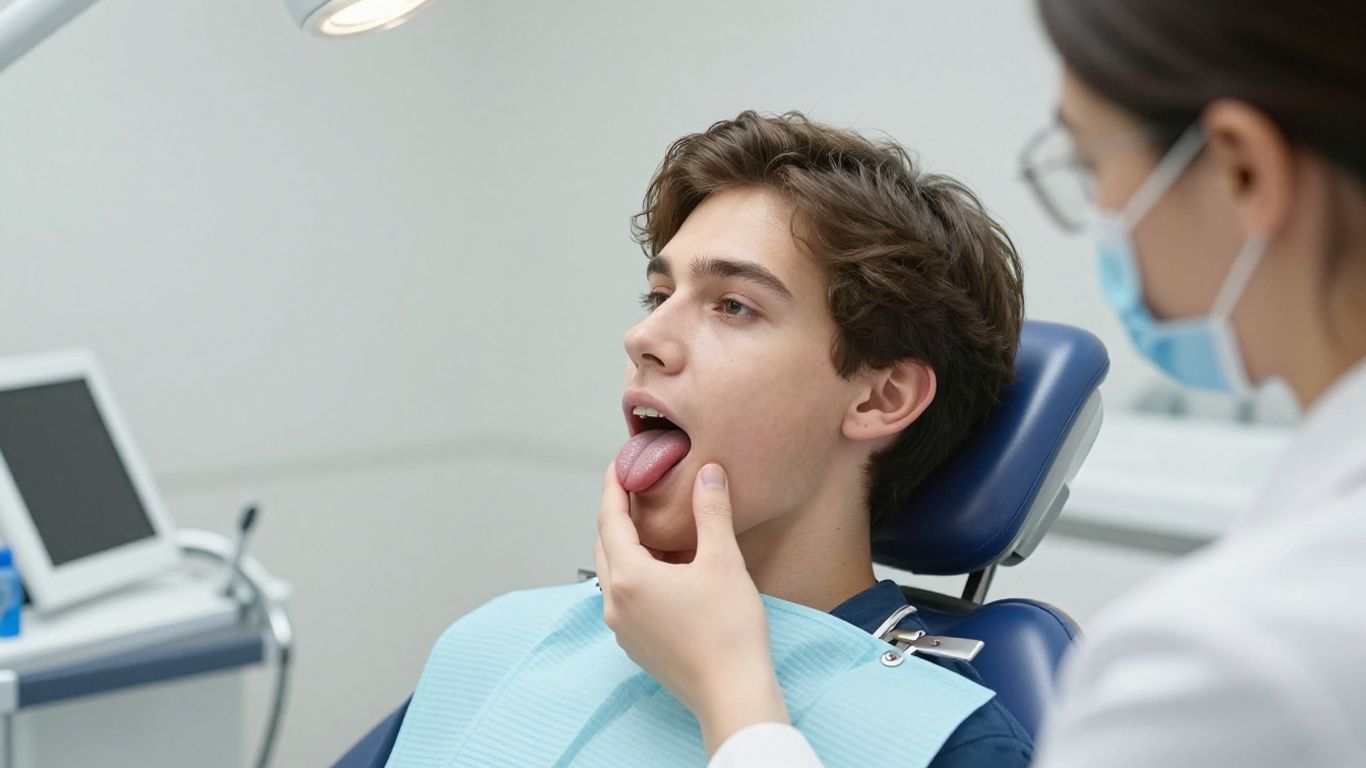
When you compare the habits, focus on what happens during ordinary activities: where the tongue rests, whether the lips close comfortably, whether swallowing requires facial effort, and whether the teeth meet. Separating the patterns helps your care team decide whether you need habit support, breathing assessment, therapy, orthodontic correction, or a combination of approaches.
How Tongue Thrusting Affects Teeth and Bite Over Time
Your teeth respond to repeated forces from the tongue, lips, cheeks, and bite. Tongue thrust does not automatically cause every dental problem, and it is not the only possible explanation for an open bite. Still, persistent forward pressure can contribute to changes in tooth position, spacing, and the way the upper and lower teeth meet.
The effect may be more noticeable while the jaws and teeth are developing, but adults can also experience consequences over time. You might notice an open space when you close your teeth, a gap between front teeth, altered speech sounds, or difficulty biting through certain foods. These concerns fit within the wider topic of teeth misalignment causes and treatment, although tongue thrust requires attention to function as well as appearance.
Signs Specific to Tongue Thrust (Not Just Open Bite)
An open bite can have several causes, so the bite alone cannot confirm tongue thrust. Signs that make tongue involvement more likely include a tongue that moves between the teeth during swallowing, visible tongue pressure against the teeth, repeated lip or chin effort, and difficulty keeping the tongue comfortably elevated at rest. The movement pattern matters as much as the bite.
A clinician may also ask about speech sounds, food escaping during swallowing, frequent cheek or tongue biting, mouth breathing, and whether your teeth shifted after earlier orthodontic treatment. These clues are considered together rather than treated as a checklist that gives an automatic diagnosis.
The table below shows how common observations can point toward different areas for assessment. It is not a substitute for an examination, but it can help you describe what you are noticing.
| Observation | What it may suggest | Area to assess |
|---|---|---|
| Tongue moves between front teeth when swallowing | Forward tongue pattern | Swallowing and tongue posture |
| Lips or chin strain to close | Compensation around the bite | Lip seal and muscle coordination |
| Open space when teeth are closed | Bite or tooth-position change | Orthodontic relationship |
| Speech sound changes | Tongue placement during speech | Speech and oral movement |
A combination of signs is more informative than one isolated feature. If you see these patterns regularly, an evaluation can clarify whether tongue thrust is contributing to the bite and what should be addressed first.
Tongue Thrust in Children vs. Tongue Thrust in Adults
Tongue thrust can appear in both children and adults, but the context is different. In a child, the pattern may be connected with development, oral habits, breathing concerns, or the transition from an early infant swallowing reflex. Because the teeth and jaws are still changing, early guidance may help prevent the habit from influencing the developing bite.
In an adult, the pattern is usually more established. You may have adapted to it without realizing it, and the effects can include tooth movement, a persistent open bite, speech concerns, or jaw discomfort. Previous dental or orthodontic treatment may also make the history more complicated, particularly if teeth have moved after braces or aligners.
Neither age makes treatment impossible. Children and adults both benefit from a careful assessment, realistic goals, and practice that fits daily life. The difference is that orthodontic care for adults often must account for an existing bite, long-standing muscle habits, and the need to maintain any correction already achieved.
Why Adult Tongue Thrust Treatment Is Often More Complex
Adult treatment can take more planning because the tongue pattern has had longer to become automatic. Your teeth may already have adapted to the pressure, and the surrounding muscles may recruit extra effort to help you swallow or close your lips. If you have had orthodontic treatment before, the question is not only how to improve the bite but also how to reduce the chance of another shift.
You may also have several concerns at once, such as mouth breathing, a history of thumb sucking, a speech change, or discomfort when chewing. These issues do not all have the same solution. A coordinated assessment helps separate the habit from the dental effects and prevents the treatment plan from focusing on tooth position alone.
Relapse After Orthodontic Work: A Common Adult Concern
If your teeth moved after earlier orthodontic treatment, you may understandably worry that the same thing will happen again. Tongue thrust can be one factor in relapse, but tooth position is influenced by several forces, including retention, growth, periodontal support, and normal changes over time. Your history matters, including how consistently you wore retainers and when you first noticed the shift.
The aim of adult tongue thrust treatment is therefore not simply to make the teeth look straighter again. It may involve retraining the tongue and swallowing pattern, reviewing retention, and deciding whether orthodontic correction is appropriate. A plan that addresses function as well as alignment gives you a clearer way to protect the result. If this sounds like what you’re experiencing, an evaluation can review your retainer, bite, and tongue posture together rather than treating the shift as a mystery.
What Causes Tongue Thrusting to Develop or Persist
There is rarely one explanation that applies to everyone. Tongue thrust may begin when an early swallowing pattern persists, or it may be reinforced by habits and physical conditions that change where the tongue rests. Some people notice it after years of mouth breathing or nasal obstruction; others have a pattern that has been present since childhood without a clear starting point.
Possible contributing factors include prolonged use of oral habits, difficulty breathing through the nose, changes in the shape of the mouth, speech or swallowing coordination, and differences in oral muscle function. A short lingual frenulum or other structural concern may also be considered, but it should not be assumed to be the cause without an assessment.
Your daily pattern can offer useful clues. Notice whether you sleep with your mouth open, whether your tongue presses against your teeth when you swallow, and whether you need to tighten your lips or chin to keep your mouth closed. These observations do not diagnose the problem, but they can make your appointment more productive.
Diagnosing Tongue Thrust Before Starting Treatment
Diagnosis begins with questions about your dental history, breathing, speech, swallowing, and previous treatment. The clinician may watch you at rest and during several swallows, listen to speech, and look at how your lips, cheeks, tongue, and jaw coordinate. Your bite and tooth positions are assessed at the same time because function and structure often influence each other.
An evaluation may also include photographs, dental records, or other orthodontic documentation when tooth movement needs to be understood. The purpose is not to label every unusual movement as tongue thrust. It is to identify whether the tongue pattern is persistent, whether it is contributing to your symptoms, and which professionals should be involved.
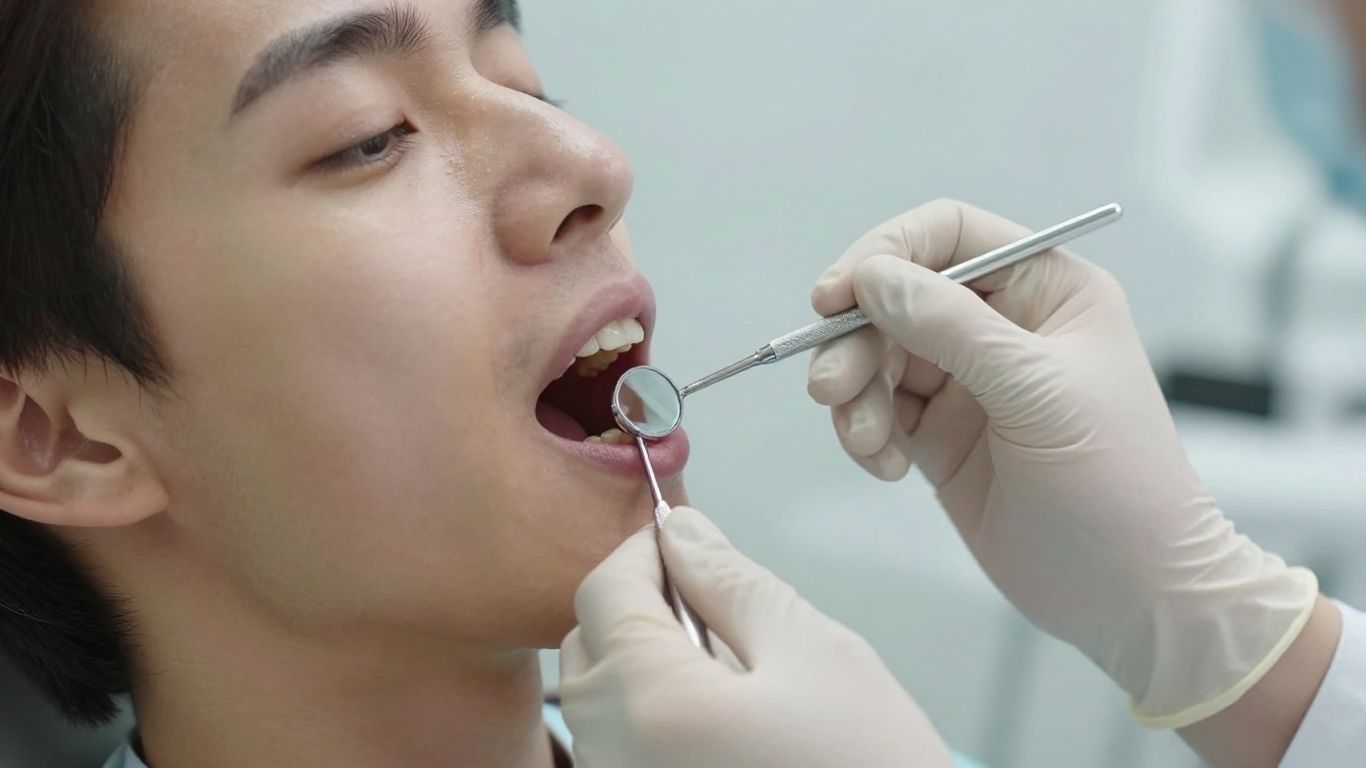
Before starting tongue thrust treatment, ask what the assessment found and how each part of the plan relates to that finding. You should understand whether the first goal is changing tongue posture, improving swallowing coordination, correcting the bite, managing breathing concerns, or monitoring a combination of factors. That explanation helps you take an active role in the process.
Tongue Thrust Treatment for Adults: What the Process Involves
Treatment for tongue thrust is usually gradual because it aims to change an automatic pattern rather than simply remind you where to put your tongue. Your plan may include education, exercises, guided practice, and regular review of how you swallow and rest. If tooth position has changed, orthodontic care may be considered alongside functional work.
The process often begins by identifying your current tongue posture and the movements that occur when you swallow. You then practise a more coordinated pattern under guidance and apply it during everyday activities. Progress depends on the nature of the problem, your consistency, and whether other concerns such as nasal breathing or dental relapse need attention.
Myofunctional Therapy and Retraining Swallow Patterns
Myofunctional therapy focuses on coordinated movement and resting posture of the oral muscles. For tongue thrust, this can include learning where the tongue should rest, improving lip seal, practising a controlled swallow, and reducing compensatory movements in the chin or cheeks. A review of orofacial myofunctional therapy research is available through the National Institutes of Health, while your own plan should be individualized.
You may practise briefly and frequently rather than relying on one long session. Exercises are selected according to your findings, and your clinician checks whether the new pattern carries over into eating, speaking, and unconscious swallowing. Therapy is most useful when you understand the purpose of each exercise and can fit the practice into your normal routine.
Therapy does not move teeth by itself, and orthodontics does not automatically retrain a swallow. When both structure and function are involved, the two parts of treatment may need to be sequenced or coordinated. Your assessment determines whether one approach is enough or whether combined care makes sense.
Does Tongue Thrusting Treatment Involve Orthodontics Too?
Sometimes it does, but not in every case. If your teeth are well positioned and the main concern is an altered swallowing pattern, therapy may be the central part of treatment. If tongue pressure has contributed to an open bite, spacing, or relapse, orthodontic treatment may be considered to improve the relationship between the teeth.
The choice depends on the degree of tooth movement, your bite, your goals, and whether the tongue pattern is still active. Moving teeth without addressing a persistent functional pressure may leave an important contributor untreated. Conversely, therapy alone cannot reposition teeth that have already moved significantly.
When Braces or Retainers Are Needed Alongside Therapy
Braces or clear aligners may be used when the bite needs correction, while retainers help maintain tooth position after active treatment. Your orthodontic provider may also review an existing retainer if it no longer fits or if your teeth have shifted. How long to wear retainers after braces can help explain why retention remains part of long-term planning.
A combined plan should make the roles clear. Orthodontics addresses tooth position and bite relationships; therapy addresses tongue posture and swallowing coordination; retention helps support the corrected position. The timing varies, so you should avoid assuming that every adult needs braces or that therapy can replace orthodontic care.
A Real Case From Our Practice: An Adult Patient’s Relapse Story
An adult patient may return years after orthodontic treatment because the front teeth have shifted and an opening has begun to appear when the teeth close. They may remember having straight teeth previously and feel frustrated that wearing a retainer has not fully resolved the change. During an assessment, the clinician may observe a forward tongue movement during swallowing as well as extra effort from the lips and chin.
In that situation, the relapse is not treated as proof that one factor caused everything. The history, current bite, retainer use, tongue posture, and swallowing pattern all need to be reviewed. The patient may be advised to work on functional retraining before, during, or after orthodontic correction, depending on the findings.
A story like this is useful because it shows why adult tongue thrust treatment should be individualized. It does not promise that every patient will have the same cause or outcome. At Outaouais Orthodontics, a relapse-focused evaluation can help you understand whether tongue movement is relevant to your own relapse concerns and what further assessment may be appropriate.
How Long Myofunctional Therapy for Tongue Thrust Typically Takes
There is no single timetable for myofunctional therapy. A straightforward habit may respond differently from a long-standing adult pattern combined with tooth movement, mouth breathing, or speech concerns. The number and frequency of appointments, your home practice, and the need for orthodontic treatment all affect the overall course.
You may notice awareness of the tongue position relatively early, while making the new pattern automatic can take longer. Improvement should be judged by function as well as appearance: how you swallow, whether your lips close comfortably, where the tongue rests, and whether the bite remains stable. Your clinician can adjust the exercises as your coordination improves.
Consistency matters more than trying to rush. Short, regular practice is generally easier to maintain than occasional intensive effort, and follow-up helps identify when an old pattern returns. If orthodontic treatment is also required, the full treatment timeline may extend beyond the therapy period itself.
Book a Tongue Thrust Evaluation With Outaouais Orthodontics
If you notice a forward tongue movement, an open bite, speech changes, or teeth shifting after previous orthodontic care, an evaluation is a sensible next step. You do not need to diagnose yourself before booking. Bring any questions about swallowing, breathing, retainers, or relapse so the discussion can cover the full picture.
Outaouais Orthodontics can help you begin with an assessment of the bite and the concerns you have noticed. From there, you can learn whether tongue thrusting treatment, orthodontic care, myofunctional therapy, or additional evaluation should be considered. The goal is a plan based on your actual movement pattern rather than on appearance alone.
If you are looking specifically for tongue thrust treatment for adults, call Dr. Brent Côté and the team at 819-685-0808, or start with an evaluation and ask how the proposed care will address both the established habit and the stability of your teeth. A clear explanation of the sequence, expected practice, and retention needs makes it easier to decide on the next step and stay involved throughout treatment.
Conclusion
Tongue thrust can influence the bite, speech, swallowing, and stability of orthodontic results, but it can be assessed and addressed at any age. With a plan that matches your tongue posture, dental findings, and daily habits, you can work toward healthier function and a more stable bite.
Frequently Asked Questions
What is tongue thrust?
Tongue thrust is a pattern in which the tongue moves forward, between the teeth, or to the sides during swallowing, speech, or rest. It may affect tooth position and bite when it persists over time.
Can adults develop or still have tongue thrust?
Yes. Adults may retain a childhood pattern or develop persistent tongue pressure alongside mouth breathing, dental changes, or altered oral muscle coordination. An assessment can determine whether the pattern is still present.
Can tongue thrust cause an open bite?
Persistent tongue pressure can contribute to an open bite, but an open bite may have other causes as well. A clinician needs to assess the bite and observe tongue movement before linking the two.
Is tongue thrust treatment possible without braces?
Sometimes. If tooth position is relatively stable and the main issue is tongue posture or swallowing coordination, therapy may be sufficient. Orthodontics may be needed when the bite or tooth alignment has changed.
How does myofunctional therapy help tongue thrust?
Myofunctional therapy works on oral muscle coordination, tongue resting posture, lip seal, and swallowing patterns. It uses guided practice to help make a more functional movement pattern automatic.
Can tongue thrust cause teeth to move after braces?
It may be one factor in post-treatment tooth movement, but relapse can have several contributors, including retention and normal changes over time. A review of your history and current bite is needed.
When should you seek an evaluation?
Consider an evaluation if you notice a tongue moving between your teeth, repeated open-mouth posture, swallowing difficulty, speech changes, an open bite, or shifting after previous orthodontic treatment.