
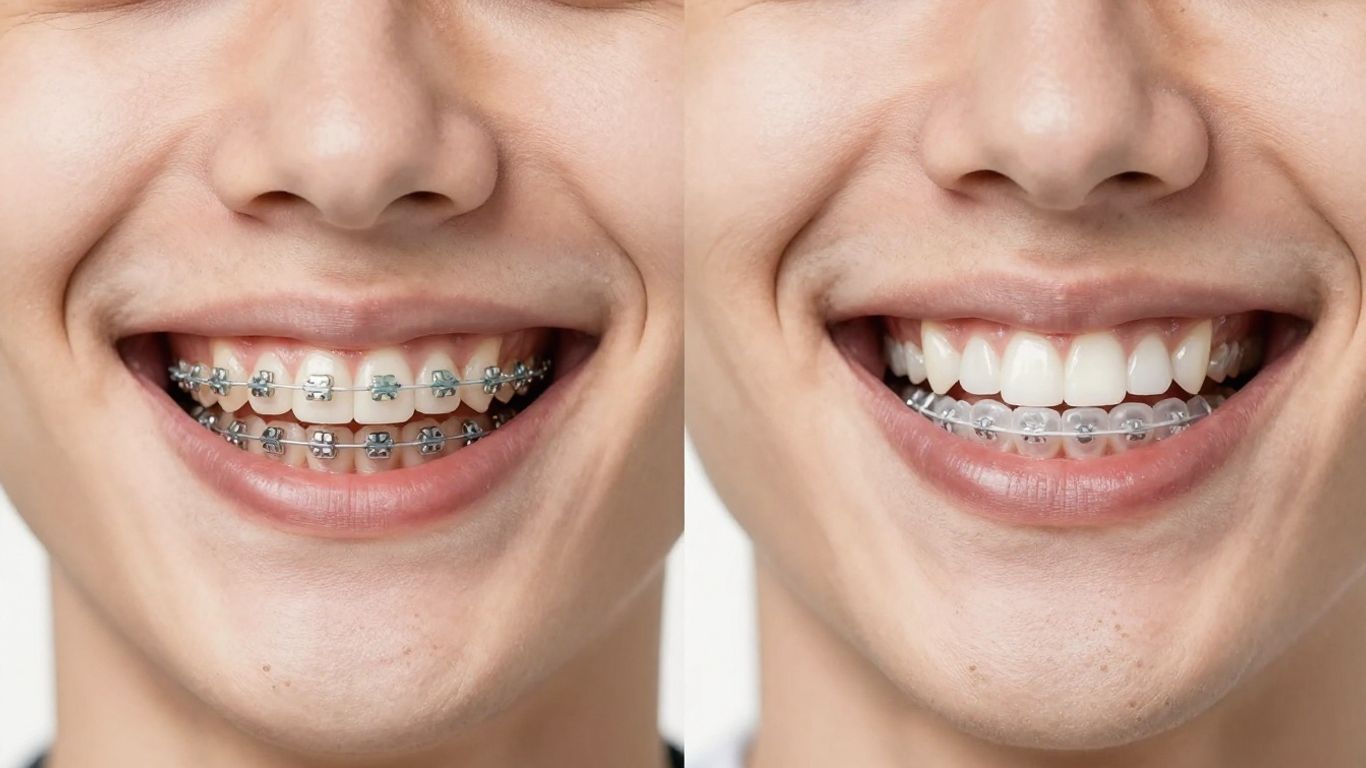
Deciding whether to get Invisalign or braces can feel like a big deal. Both can give you a straighter smile, but they work in different ways and have their own pluses and minuses. It’s not always a clear-cut answer, and what’s best really depends on your teeth, your lifestyle, and what you’re looking for. We’re going to break down the Invisalign vs braces debate to help you figure out which path might be the right one for you.
What’s the Difference Between Invisalign and Braces?
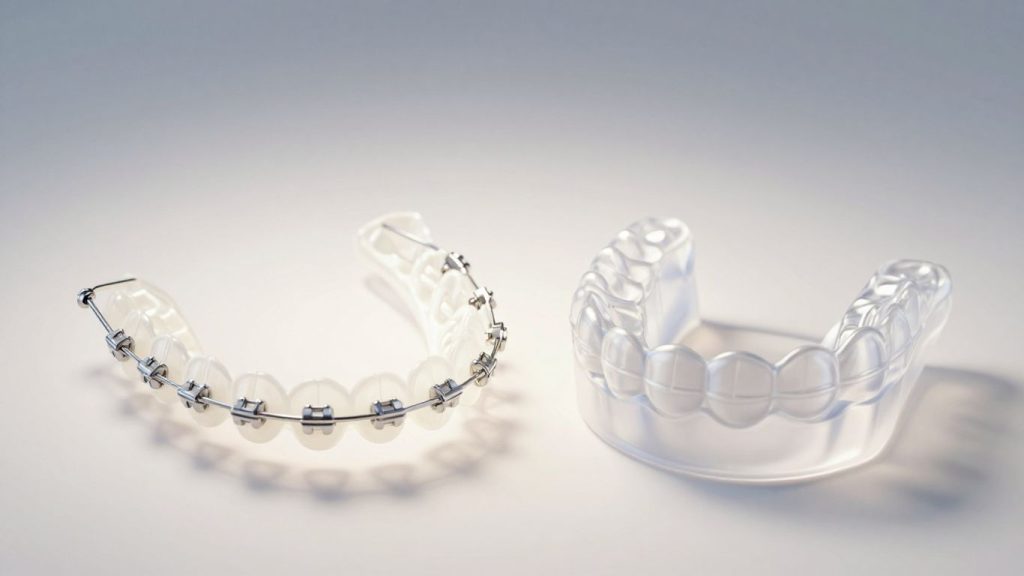
So, you’re thinking about straightening your teeth, huh? It’s a pretty big decision, and one of the first things people wonder about is how Invisalign stacks up against traditional braces. Both aim to give you a straighter smile and better oral health, but they go about it in totally different ways. It’s not just about looks; it’s about how they work, how they feel, and how they fit into your life.
Invisalign vs Metal Braces: A Side-by-Side Comparison
Think of traditional metal braces as the tried-and-true method. They use metal brackets that get stuck onto your teeth, and then a wire runs through them, held in place by tiny rubber bands. Your orthodontist tightens this wire during check-ups, which is what gradually moves your teeth. They’re pretty effective, especially for more complicated issues, and they work around the clock.
Invisalign, on the other hand, uses a series of clear plastic aligners. These are custom-made just for you, based on a 3D scan of your mouth. You wear each set for about one to two weeks before swapping it out for the next one in the series. The aligners are designed to fit snugly and apply just the right amount of pressure to shift your teeth. The biggest difference most people notice right away is that Invisalign aligners are nearly invisible.
Here’s a quick look at how they compare:
• Appearance: Invisalign is practically invisible; braces are noticeable.
• Removability: You can take out Invisalign aligners to eat, drink, and brush your teeth. Braces are fixed in place.
• Mechanism: Invisalign uses a series of custom trays. Braces use brackets and wires that are adjusted by your orthodontist.
It’s worth knowing that modern braces have come a long way; low-friction braces are one example of how traditional treatment has evolved to be more comfortable and efficient.
Invisalign vs Braces for Crooked Teeth: Which Works Better?
When it comes to fixing crooked teeth, both Invisalign and braces can get the job done, but they might be better suited for different situations. For mild to moderate crowding or spacing issues, Invisalign is often a fantastic choice. Its ability to make precise movements with those custom aligners means it can tackle a good range of alignment problems effectively. In fact, Invisalign technology has advanced significantly, now capable of treating a wider range of orthodontic issues beyond minor tweaks.
Traditional braces, with their robust system of wires and brackets, are often the go-to for more complex cases. If you have severe crowding, significant bite problems, or teeth that need a lot of repositioning, braces might offer a more predictable and powerful solution. Your orthodontist will be able to assess the specific nature of your crooked teeth and determine which system is best equipped to handle the job. It really comes down to the individual case and what your orthodontist recommends after a thorough examination.
Key Differences: Invisalign vs. Braces
When you’re trying to figure out the best way to straighten your teeth, it often comes down to two main options: Invisalign and traditional braces. Both get the job done, but they go about it in pretty different ways, and understanding these differences is super important for picking the right path for you. It’s not just about how they look. It’s about how they work, how they feel, and what they’ll cost.
Invisalign vs Braces Cost: What Should You Expect to Pay?
The price tag is usually a big factor for most people. Generally speaking, the cost of Invisalign compared to braces can be a bit higher, though this isn’t always the case. Traditional metal braces often come in at a lower price point, making them a more accessible option for some budgets. However, the final cost for both Invisalign and braces really depends on how complex your dental situation is and how long you’ll need treatment. For example, extensive alignment issues might push the price of either option up.
Treatment Process and Time
How each system works is where the real magic (and difference) happens. Traditional braces use a system of metal brackets glued to your teeth, connected by wires that an orthodontist tightens during regular visits. This constant pressure gradually moves your teeth. It’s a tried-and-true method that works well for a wide range of issues, including really complex ones.
Invisalign, on the other hand, uses a series of clear, custom-made plastic aligners. You wear each set for about one to two weeks before swapping it out for the next one in the series. These aligners are designed to gently shift your teeth into place over time. Because they’re removable, you can take them out to eat, drink, brush, and floss. This makes maintaining good oral hygiene a bit simpler compared to dealing with the nooks and crannies around braces. Compared to dealing with the nooks and crannies around braces. To learn more about Invisalign pricing at our clinic, visit our Invisalign® in Gatineau page.
Invisalign: Pros & Cons
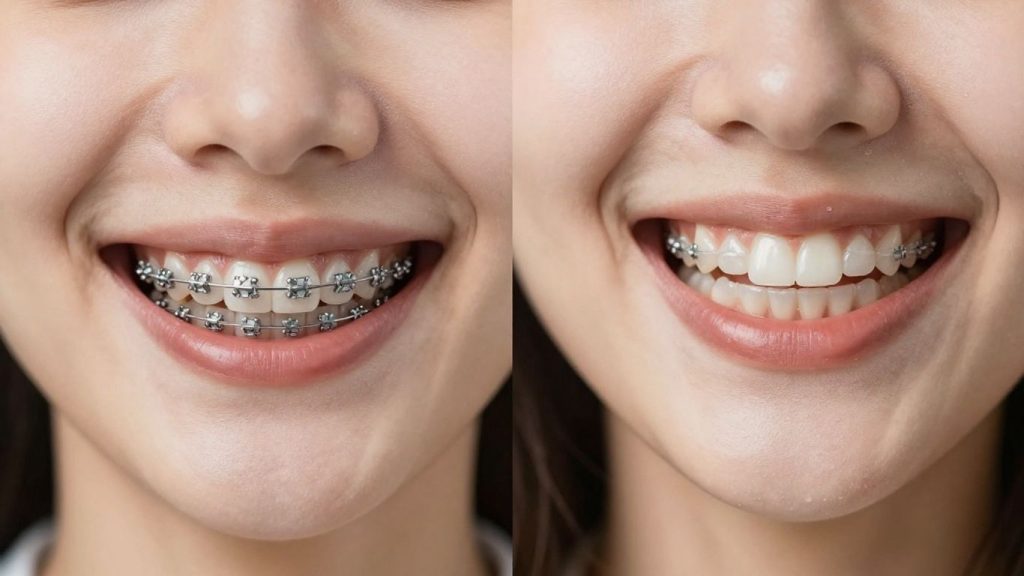
Invisalign has really changed the game for people wanting straighter teeth without the obvious metal hardware. The biggest win? They’re practically invisible. Seriously, most people won’t even notice you’re wearing them, which is a huge plus if you’re self-conscious or have a job where appearance matters a lot. Plus, because you can take them out, eating is a breeze. No more worrying about getting food stuck in brackets or having to avoid popcorn. Brushing and flossing are also way simpler, which is great for keeping your gums and teeth healthy during treatment. The smooth plastic is generally more comfortable too, meaning fewer of those annoying mouth sores you can get with braces. This makes the whole experience much more pleasant for many.
However, it’s not all sunshine and rainbows. You really have to be disciplined with Invisalign. They need to be in your mouth for about 20 to 22 hours a day to actually work. If you’re forgetful or tend to take them out and leave them lying around, you risk losing them or delaying your treatment. And while they’re great for a lot of people, they might not be the best choice for really complex bite issues or severely crooked teeth. Sometimes, those tougher cases just need the power of traditional braces.
• Aesthetics: Nearly invisible, great for discretion.
• Removable: Easy to eat, drink, brush, and floss.
• Comfort: Smooth plastic, less mouth irritation.
• Hygiene: Easier to maintain good oral health.
Braces: Pros & Cons
Traditional braces have been around forever for a reason: they work, and they work well for a wide range of problems. They’re super effective, even for the most complicated alignment issues and bite problems that Invisalign might struggle with. Since they’re permanently attached to your teeth, you don’t have to worry about remembering to put them in or losing them. They’re constantly working to move your teeth, 24/7. If you have children, you may also be wondering about the best age for braces. It makes a big difference in results, which can make the whole process a bit more fun and personalized. They’re also generally a bit cheaper than their clear counterparts.
On the flip side, let’s be real, they’re not exactly subtle. The metal brackets and wires are pretty noticeable, which can be a bummer if you’re worried about how you look. They can also be uncomfortable, especially right after an adjustment or if a wire pokes your cheek. You’ll also have to be careful about what you eat – no sticky candy, hard nuts, or crunchy apples that could break a bracket. Cleaning around them takes more effort, and if you don’t do a thorough job, you might end up with cavities or gum issues. It’s a trade-off, for sure.
• Effectiveness: Handles complex cases very well.
• Constant Wear: No risk of forgetting or losing them.
• Durability: Sturdy materials designed for long-term treatment.
• Cost: Often more budget-friendly than clear aligners.
• Aesthetics: Very visible metal brackets and wires.
• Discomfort: Can cause mouth sores and soreness.
• Dietary Restrictions: Need to avoid certain foods.
• Hygiene: Requires more diligent cleaning around hardware.
Every treatment option has its good points and its drawbacks. Understanding these can help you pick the best path for your smile. Every smile is different, and so is every treatment plan. See what sets us apart and why patients across Gatineau, Hull, and Aylmer choose Outaouais Orthodontics.
So, Which One Wins?
Alright, so we’ve gone over the ins and outs of both Invisalign and traditional braces. It’s not really a simple ‘one is better than the other’ situation, is it? Invisalign is pretty slick for people who want a less noticeable option and don’t mind taking trays in and out for meals and cleaning. But, if you’ve got more complex bite issues or just want something that’s always working without you having to think about it, braces might be your best bet. Ultimately, the best choice really comes down to what works for you – your smile goals, your budget, and your daily life. Chatting with your orthodontist is the key here; they can look at your specific teeth and tell you what’s going to give you the best results. Have questions? Call us directly at 819-685-0808. we’re happy to help you decide. No matter which path you choose, getting that straighter smile is totally achievable!
Ready to Choose? Book Your Free Consultation at Outaouais Orthodontics in Gatineau
At Outaouais Orthodontics, Dr. Brent Côté is the only Premier Preferred Provider of Invisalign® in Gatineau and he offers the full range of modern braces options too. Whether you’re leaning toward clear aligners or traditional braces, we’ll assess your teeth and give you an honest recommendation based on your specific needs, not a sales pitch.
No referral needed. We offer early morning and evening appointments, and your initial consultation will give you a clear picture of your options, timeline, and costs.
Frequently Asked Questions
Which is faster: Invisalign or braces?
Invisalign usually works faster for simple cases and can take about 6 to 18 months. Braces often take longer, especially for more complicated problems, with most treatments lasting 18 to 24 months.
Are Invisalign aligners really invisible?
Invisalign aligners are clear and hard to see, but they are not completely invisible. Most people won’t notice them unless they look closely.
Can I eat anything I want with Invisalign or braces?
With Invisalign, you can eat whatever you like because you remove the aligners when eating. With braces, you need to avoid sticky or hard foods that could break the brackets or wires.
Which option is more painful: Invisalign or braces?
Both Invisalign and braces can cause some discomfort, especially after adjustments or when switching to a new aligner. Most people say Invisalign is less painful because there are no sharp wires or brackets.
Is Invisalign more expensive than braces?
Invisalign can be more expensive than braces, but the cost depends on your dental needs, where you live, and your dentist’s prices. Sometimes, the prices are similar, but Invisalign is often a bit higher.
Who should not get Invisalign?
Invisalign is not the best choice for people with very crooked teeth or serious bite problems. Braces are usually better for those cases because they can fix more complex issues.